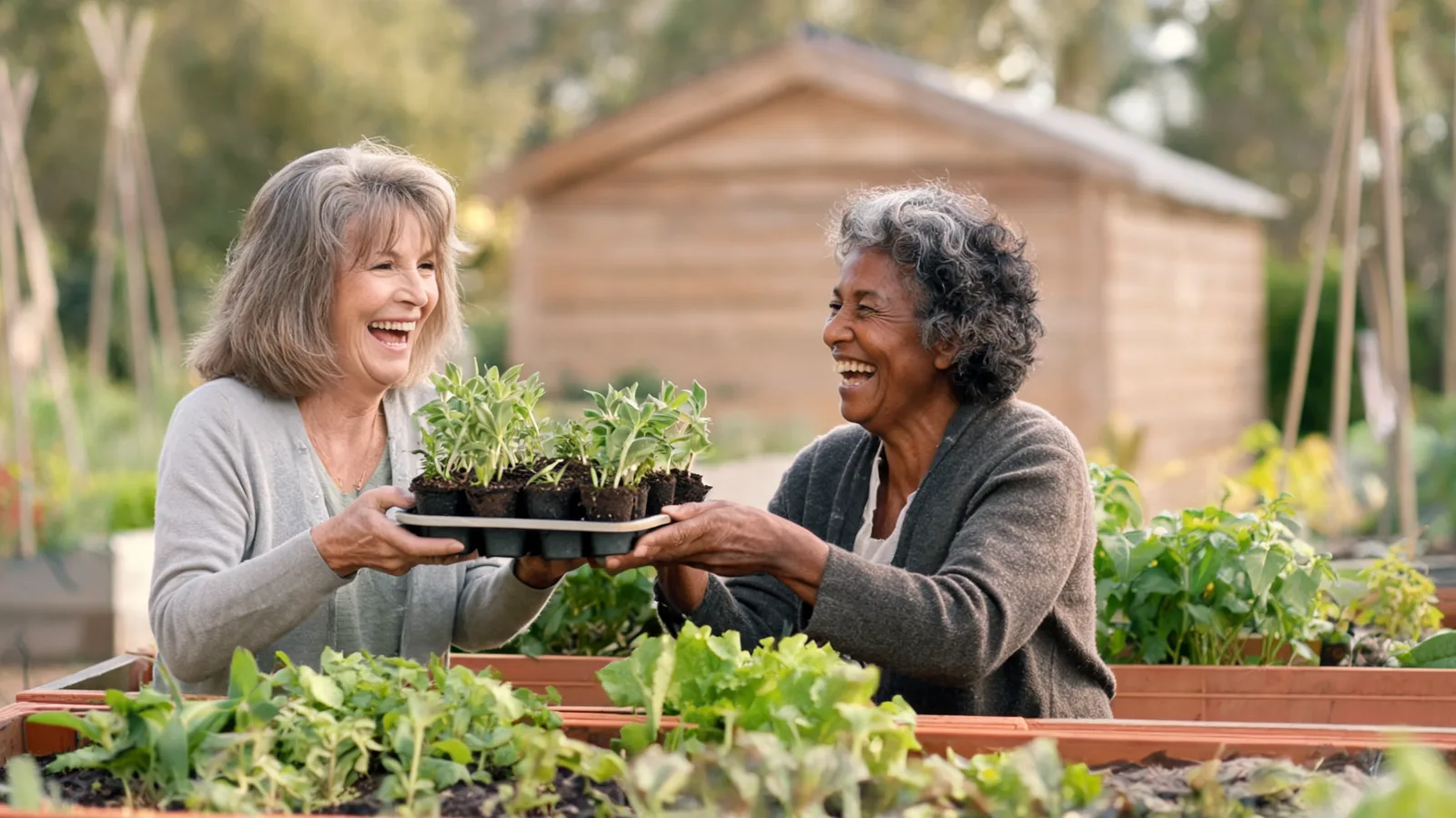
Gardening is one of the most accessible and rewarding hobbies available to older Australians. Whether you have a sprawling backyard, a few pots on a balcony, or access to a community garden, you can experience the meaningful benefits that gardening offers for your physical health, mental wellbeing, and social connection.
Physical Health Benefits
Gentle Movement
Gardening provides regular, varied movement: digging, planting, weeding, and watering all engage different muscle groups. This gentle activity may help support strength, flexibility, and balance without feeling like 'exercise.'
Cardiovascular Activity
Gardening tends to raise your heart rate moderately and sustains activity for extended periods, which supports cardiovascular health.
Bone Health
The resistance involved in gardening tasks is associated with stronger bones and muscles that support your skeleton.
Mental and Emotional Benefits
Time in nature and green spaces is associated with reduced stress and anxiety. The act of nurturing plants creates a sense of purpose and accomplishment. Watching something you planted grow is deeply satisfying and provides a tangible record of your contribution.
Cognitive Engagement
Gardening involves planning, problem-solving, and memory; you remember what you planted, when, and what it needs. This cognitive engagement supports brain health.
Social Connection
Community gardens, gardening clubs, and plant-sharing groups create opportunities to connect with others who share your interests. Many gardeners enjoy trading plants, sharing advice, and celebrating harvests together.
Growing Food You Actually Eat
Growing vegetables connects you to nutrition in a direct way. Tomatoes, lettuce, herbs, and beans are straightforward to grow and offer the satisfaction of eating something you cultivated.
Starting a Garden if You Are New to It
Start Small
Begin with a few easy-to-grow plants: herbs like mint and parsley, vegetables like cherry tomatoes or lettuce, or low-maintenance perennials if ornamental gardening appeals to you.
Prepare Your Space
Good soil is the foundation. Amend your planting area with compost. Ensure adequate sunlight for what you are growing.
Water Wisely
Most plants need consistent moisture, not constant wetness. Water slowly in the early morning so water reaches roots.
Adapt for Your Physical Abilities
Raised beds reduce bending. Container gardens work on balconies. Use ergonomic tools that reduce strain on joints. Invest in a good stool or kneeling pad.
Gardening Safely
- Wear sunscreen and a hat to protect from sun damage
- Use lifting techniques that protect your back; bend your knees, not your waist
- Take regular breaks to avoid fatigue
- Stay hydrated, especially on hot days
- Wear gloves to protect your hands
- Be cautious with tools and pesticides; many gardening tasks can be managed without chemicals
Growing Indoors
If outdoor gardening is not feasible, indoor herb and plant growing is increasingly accessible. Windowsill herbs, indoor vegetable gardens, and hydroponic systems allow you to garden year-round regardless of weather.
The Rewards of Patience
Gardening teaches patience and respect for natural cycles. You cannot rush growth, but consistent care tends to yield results. This perspective is grounding and restorative in a fast-paced world.
A Practical Step You Can Take This Week
Visit a local nursery and pick up one easy starter plant (a basil, a cherry tomato seedling, or a small herb pot) along with a bag of potting mix. The lowest-friction garden is one already on your kitchen windowsill within a week of reading this article.
Important Note
This information is general in nature and is not a substitute for professional medical advice. Please consult your GP before making changes to your health routine.