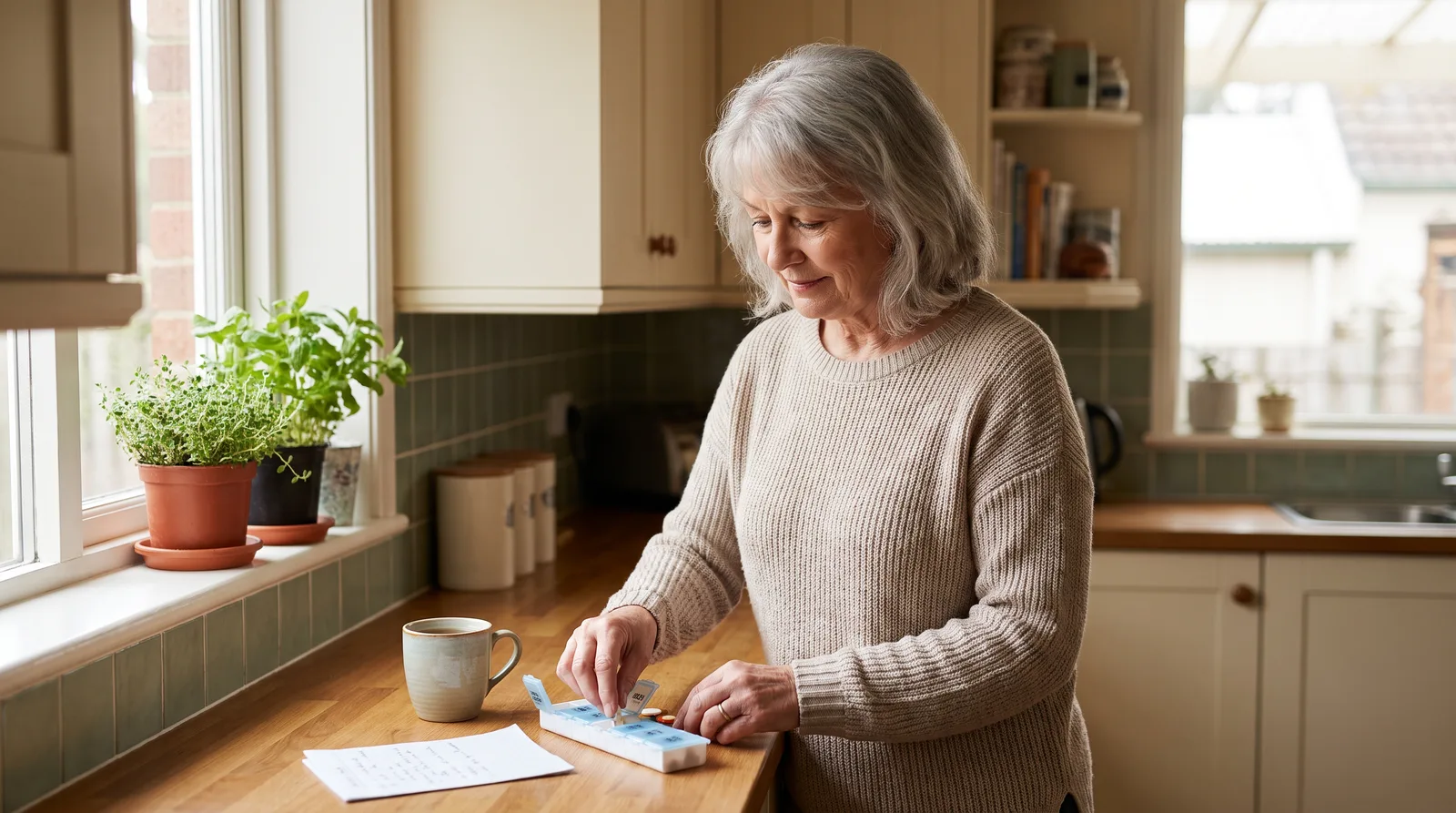
If you take several medicines each day, you are far from alone. Many older Australians manage a number of prescriptions, and keeping track of them all can feel like a small daily juggling act. A few simple habits can make the whole thing calmer, clearer and safer.
Keep an up to date list
One of the most useful things you can do is keep a current list of everything you take. Include the name of each medicine, the dose, and what it is for, along with any vitamins or supplements. Keep a copy in your wallet or on the fridge, and bring it to every appointment. When a health professional can see the full picture at a glance, they are better able to help you, and it saves a lot of trying to remember on the spot.
Consider a Home Medicines Review
If your list has grown over the years, it may be worth asking about a Home Medicines Review. This is a service where a pharmacist sits down with you, often in your own home, and goes through everything you take. They can check that your medicines still suit you, look for anything that might not work well together, and answer your questions. Your GP can help arrange it. Many people find it reassuring to have a fresh pair of expert eyes on their routine.
Simple systems that help
A weekly pill organiser, with a compartment for each day, makes it easy to see at a glance whether you have taken your medicines. Setting a gentle reminder on your phone, or linking your medicines to a daily habit such as breakfast, can also help them become second nature. If you ever miss a dose, resist the urge to double up. Instead, check the advice on the label or ask your pharmacist what to do.
Be careful with extras
During winter it is tempting to reach for cold and flu remedies from the chemist, but some of these can interact with prescription medicines. Before adding anything new, including over the counter products and herbal supplements, have a quick word with your pharmacist. It only takes a moment and can save trouble later.
Store them well, and keep them going
Where you keep your medicines matters more than people often think. A cool, dry place away from direct sunlight is usually best, and the bathroom, despite being a common choice, can be too warm and damp. Keep medicines well out of reach of visiting grandchildren, and check the use by dates from time to time, returning anything out of date to your pharmacy for safe disposal. It also helps to order your repeat prescriptions before you run low, so you are never caught short over a long weekend. If a medicine ever seems to disagree with you, do not simply stop it on your own. Speak with your GP or pharmacist first, as they can guide you on the safest way forward.
Managing medicines well is really about small, steady systems rather than willpower. A tidy list, a good organiser and a friendly pharmacist you can call on will carry you a long way. If you are ever unsure about a medicine, your pharmacist is only a phone call or short walk away, and is always happy to help.
Important Note
This article is general information only and is not a substitute for personal medical advice. Always follow the instructions on your medicines and speak with your GP or pharmacist about your own situation.