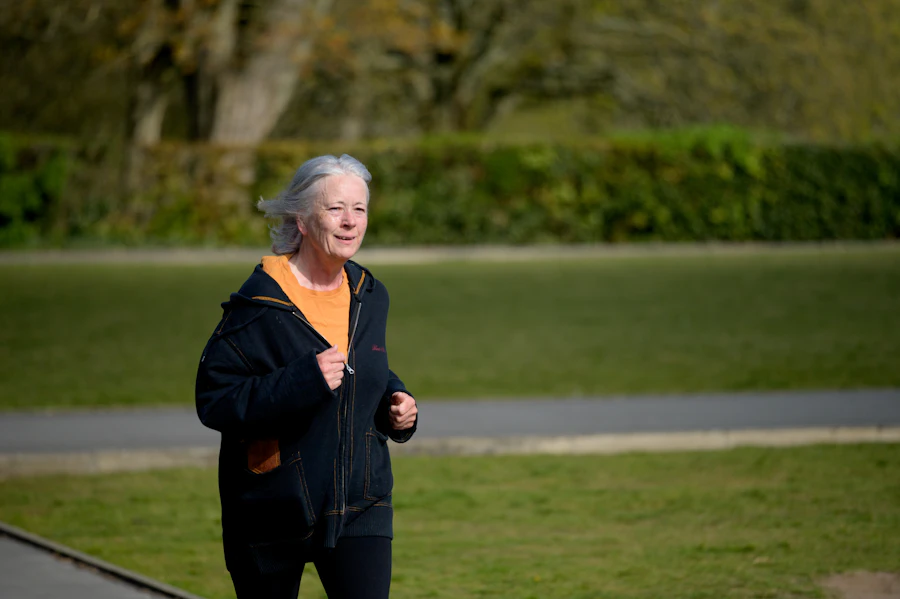
Sore knees can feel like a barrier to staying active, but the truth is the opposite: gentle movement is one of your most powerful tools for managing discomfort and maintaining independence. The key is choosing exercises that build strength and flexibility without hammering your joints. This article explores evidence-based, low-impact exercises that suit ageing knees.
Why Exercise Matters for Sore Knees
When your knees hurt, the natural instinct is to rest them. But prolonged inactivity often makes joint pain worse. Muscles weaken, joints stiffen, and discomfort increases. In contrast, gentle regular exercise:
- Strengthens the muscles that support and protect your knees
- Keeps synovial fluid moving, which lubricates and nourishes joint cartilage
- Helps maintain flexibility and range of motion
- Improves balance, which may reduce fall risk
- May help reduce inflammation over time
Low-impact exercise is exercise where at least one foot stays in contact with the ground or water. This reduces the jarring force that troubled knees often cannot handle.
Swimming and Water Aerobics
Water-based exercise is often a top choice for sore knees because water supports your body weight while providing gentle resistance. Buoyancy reduces joint stress; you can move freely without bearing load.
Options include:
- Gentle swimming using a relaxed freestyle stroke
- Water walking in shallow or deep water
- Aqua aerobics classes designed for mature participants (many councils run these at discounted rates)
- Simply moving about in warm water, which can help relax muscles
Many Australian councils operate heated pools with senior programmes. Start with 20 to 30 minutes, two or three times weekly.
Walking
Walking is the most accessible low-impact exercise. Your body has evolved to walk; it strengthens legs, supports cardiovascular health, and requires no equipment.
To walk safely with sore knees:
- Start slowly, with shorter distances
- Choose flat, even surfaces such as parks, indoor malls, or council pathways
- Wear supportive shoes with good cushioning
- Walk on softer surfaces (grass or tracks) rather than concrete where possible
- Use a stick or walking pole if it provides stability
- Aim for 20 to 30 minutes, three to five times per week
Increase duration gradually as your knees strengthen.
Stationary Cycling or Recumbent Cycling
Cycling can be a good choice for stiff or painful knees because it moves the knee through a smooth, controlled range of motion without impact. Stationary bikes are safer than outdoor cycling because you control the pace and can stop easily.
Start with low resistance and gentle speed. Aim for 15 to 30 minutes, two to four times per week. An exercise physiologist can help adjust the bike to suit your body.
Tai Chi
This ancient Chinese practice combines gentle movement, balance training, and mindfulness. Research suggests tai chi may improve strength, flexibility, and proprioception (body awareness) in ways that benefit sore knees. Many community centres and councils offer tai chi classes for seniors; some are subsidised through local health programmes.
Classes typically run 45 to 60 minutes. Regular practice is associated with reduced pain and improved mobility within weeks for many participants.
Gentle Stretching and Range-of-Motion Exercises
Holding your knees in a static position can lead to stiffness. Gentle stretching may help maintain or improve the range of motion your knees need for daily activities like walking, climbing stairs, or getting out of a chair.
Simple knee-friendly stretches include:
- Quadriceps stretch: Stand facing a wall, hold it for balance, and gently pull one foot towards your bottom
- Hamstring stretch: Sit with one leg extended, gently lean forward from the hips
- Calf stretch: Stand facing a wall, step one leg back, keep the heel on the ground, lean gently forward
Hold each stretch for 20 to 30 seconds without bouncing. Perform stretches after warming up with gentle movement, when muscles are warm and pliable.
Strengthening Exercises for the Thigh and Hip
The quadriceps (thigh muscle) and gluteals (hip muscles) act as shock absorbers for your knees. Stronger thighs may mean less stress on knee joints. Simple strengthening includes:
- Wall squats: Sit back against a wall with knees slightly bent, hold for 5 to 10 seconds, rest, and repeat
- Step-ups: Climb one or two steps on a staircase or sturdy step, focusing on control
- Clamshells: Lie on your side with knees bent, lift the top knee upward while keeping the feet together
- Glute bridges: Lie on your back with knees bent, push through your heels to lift your bottom upward
Begin with one set of 8 to 10 repetitions, two or three times weekly. Gradually increase repetitions as strength improves.
What to Avoid
Some exercises place excessive stress on sore knees:
- High-impact activities such as running, jumping, or jumping jacks
- Lunges and deep squats unless guided by a physiotherapist
- Kneeling exercises on hard floors
- Stairs in poor light or on steep inclines
If an exercise causes sharp or worsening pain (not just the discomfort of exertion), stop and consult your physiotherapist or GP.
Getting Started: A Safe Approach
Before beginning any new exercise programme, especially if you have ongoing joint pain, speak with your GP. If appropriate, ask for a referral to a physiotherapist or exercise physiologist who specialises in joint health. Medicare may subsidise these services under a Chronic Disease Management Plan.
Begin gently. It is better to do too little and feel fine the next day than to overdo it and end up with more pain. Aim for regular, consistent movement rather than occasional intense activity. Most people benefit from exercising most days of the week, even if only for 20 to 30 minutes.
A Practical Step You Can Take Today
Choose one of the activities above that you genuinely enjoy and can easily access this week, then schedule it into your week the way you would any appointment. Sustainable progress comes from consistency, not intensity.
Important Note
This information is general in nature and is not a substitute for professional medical advice. Please consult your GP before making changes to your health routine.