September brings Dementia Action Week, alongside World Alzheimer's Day on 21 September, and with it a question many people quietly carry: how do I stay a good friend to someone whose memory is changing? Too often, friends drift away after a dementia diagnosis, not from lack of love but from uncertainty about what to say or do. The friendship, though, matters as much as ever. Here is how to keep showing up.
Why friendships change, and why they matter
When a friend is diagnosed with dementia, some people step back, worried about saying the wrong thing or unsettled by the changes they see. Yet connection remains deeply important for people living with dementia, and research suggests that social engagement is associated with better wellbeing and quality of life. Your friend is still your friend. The history you share, the jokes, the loyalty; dementia changes how those are expressed, not whether they are valued.
Understanding what changes, and what does not
Dementia affects memory, planning and sometimes language, and it usually progresses gradually. What tends to endure much longer is the feeling of an encounter: whether a visit felt warm, respectful and enjoyable. Your friend may forget the details of your conversation by evening, and still carry the glow of it. Once you grasp that, the pressure lifts. The goal of a visit is not to be remembered; it is to bring a good hour into your friend's day.
Practical ways to visit well
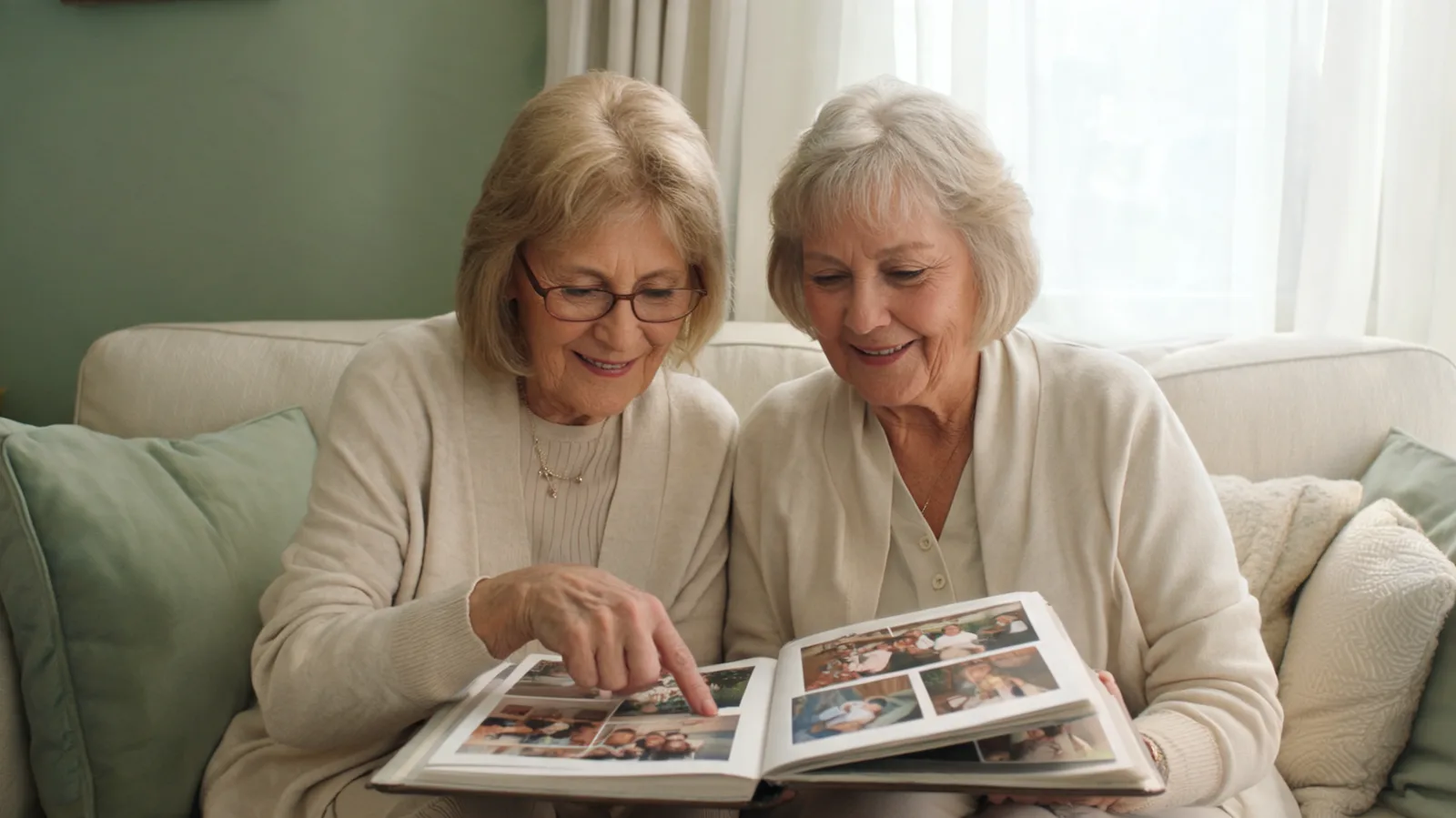
Small adjustments make visits easier for everyone. Choose a calm, familiar setting over a noisy cafe. Come at the time of day your friend is usually at their best, often mid morning. Keep the group small; one or two visitors is company, six can be a crowd. Introduce yourself naturally as you arrive, without making a test of it: it is Jan, we played tennis together for years. Let activities carry the visit when words run short; a walk in the garden, looking through photographs, listening to a favourite album, or simply sharing a pot of tea and a slice of cake.
Conversations that flow more easily
A few habits keep conversation kind and comfortable. Ask one question at a time, and prefer questions with easy answers over quiz style ones; do you remember can put a person on the spot, while I was thinking about that trip we took invites them to join in without pressure. Older memories often remain more accessible than recent ones, so stories from decades past can be rich ground. If your friend says something that is not quite accurate, let it pass rather than correcting them; the relationship matters more than the record. And if they repeat themselves, answer each time as though it were the first, because for them it is.
Looking after yourself, and finding guidance
Being a steady friend through dementia can stir up grief of its own, and it is alright to find it hard. Talk to mutual friends, share the visiting between you, and be honest with your friend's family about what you can offer. For practical advice, Dementia Australia offers excellent guidance for friends and families, including the National Dementia Helpline on 1800 100 500, which anyone can call, not just carers.
Remember, too, that your friend's partner or family carer is part of this story. A visit that gives a carer an hour to themselves, a meal dropped round, or simply asking how they are travelling can mean a great deal, because carers often feel their own world shrinking alongside their loved one's. Supporting the household, not just your friend, is one of the most practical forms of friendship there is.
Dementia Action Week asks Australians to build a more dementia friendly country, and that work is done one friendship at a time. Keep visiting, keep phoning, keep including your friend in the life you have always shared. Presence, not perfection, is the gift.
Important Note
This article is general information only and is not a substitute for personal medical advice. Please speak with your GP or another qualified health professional about your own situation.